
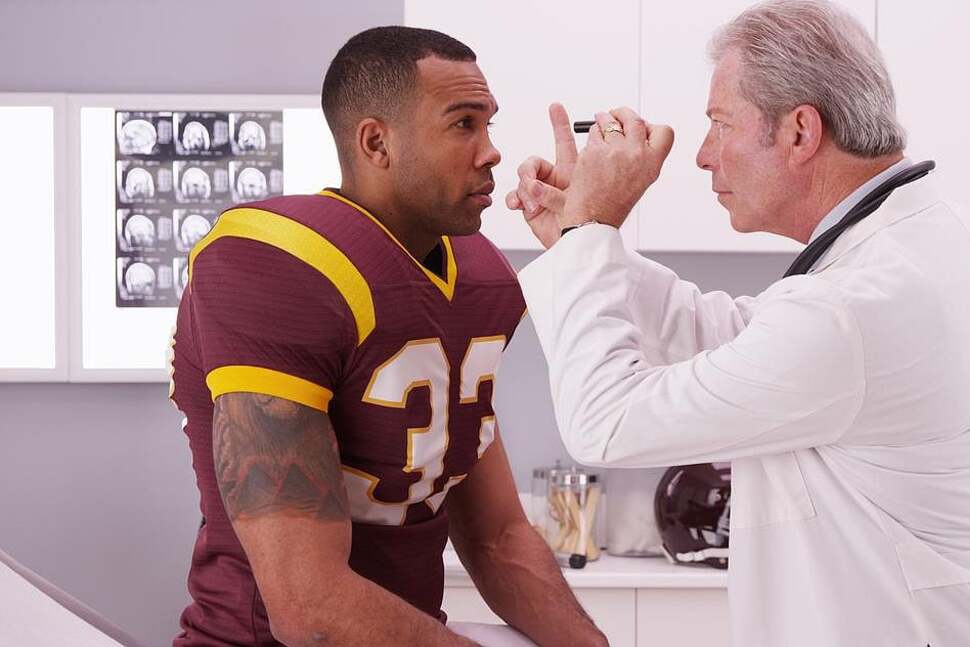
Have you taken a hit to the head and aren’t sure if you should get a concussion check? Concussions can be easy to spot, or they can have subtle symptoms that appear over time. Knowing the early signs of a concussion will help you know when to get evaluated. Some physical, cognitive, and sensory symptoms after a head injury mean you should get a concussion check right away. Getting checked early can prevent further injury and help you recover faster and smarter.
HEAD Injury: If you lose consciousness (even for a few seconds), vomit more than once, experience slurred speech, or are visibly disoriented after a blow to the head, stop playing immediately and get checked.
Take these symptoms seriously. Seizures, unequal pupil dilation, and prolonged confusion are serious symptoms that indicate you should seek emergency medical care. Bleeding from the head and progressive neurological symptoms should never be ignored.
Headaches Associated With Brain Trauma
It’s common to experience headaches with brain injuries like concussions. These headaches may appear right away or develop over time. One of the biggest signs you should seek care is if your headache:
- Lasts for hours
- Worsens with activity
- Does not improve with rest and hydration
Typically, headaches will go away within 24-48 hours after injury. However, if your headache returns with physical activity or it is getting worse over time, you should get a concussion check.
Vertigo Or Balance Issues
Another common symptom people notice after taking a hit to the head is dizziness or vertigo. You may feel light-headed during activity or when you move your head.
Some people even feel off-balance when walking in a straight line. If you experience any sort of imbalance after a blow to the head, sit down and see if symptoms improve. If they do not go away after a few minutes of rest, you should seek medical attention.
Symptoms that don’t go away with rest mean there is still stress on your brain. It’s best to get checked before continuing activity.
Thinking Slowly
After a concussion, your brain may feel “cloudy.” It can be common for athletes to describe themselves as moving in slow motion after a head injury.
This includes physical and mental tasks. You may feel like you can’t go as fast or think as quickly as you could before your injury.
Simple tasks may take longer to complete. You may even have trouble concentrating on one task at a time.
It’s common to feel like you can’t multitask after a concussion. Even if you feel perfectly capable of playing, you may notice that it takes you a second to make decisions.
If you feel yourself thinking slowly after a head injury, it may be time to see a concussion specialist.
Memory Loss
Memory problems are another classic symptom of a concussion. This can include forgetfulness of recent events, like:
- What you did earlier in the day
- What you were talking about minutes before the hit
- What happened immediately after the injury
Write these times down to show your doctor. Even small changes in memory can indicate a concussion.
Light And Noise Sensitivity
Light sensitivity and noise intolerance can happen with any headache. However, after a head injury, even normal noises and light can cause your headache to flare up or make you feel sick.
Noise and light sensitivity are signs that your brain is still recovering from injury. Pay attention to any activities that cause your symptoms to worsen.
Blurred Vision
Vision disturbances are also very common after a concussion. This can include double vision or general blurriness throughout the day.
Your eyes may feel sensitive to light. It can even be difficult to see words on a page or phone screen.
Visual symptoms are important to evaluate after head trauma. If you notice any changes in vision, seek care from your eye doctor and concussion specialist.
Seek Emergency Care For These Symptoms
Seek emergency care or call 911 if you experience any of the following symptoms immediately after head trauma:
- Cannot be awakened
- Slurred speech
- Weakness in the face, arm, or leg
- Convulsions and seizures
- Loss of consciousness
- More than one episode of vomiting
- Increasing confusion
These symptoms can be indicative of bleeding in the brain and require immediate evaluation.
Symptoms Can Come Hours Or Days Later
Not all symptoms of a concussion will happen immediately after head trauma. You could feel perfectly fine right after your injury and then symptoms could arise later that day, or even days later.
This is common and happens often. Just because symptoms are delayed, doesn’t mean you shouldn’t see a doctor.
It’s always better to be safe than sorry. Getting checked immediately after injury will allow your doctor to track your symptoms should they develop later on.
Early detection of a concussion allows your body to rest and recover while you are still symptomatic. Without early evaluation, many athletes will continue to workout, attend school, or play their sport while symptomatic prolonging recovery.
Final Advice
Don’t ignore signs and symptoms of a concussion. Head trauma should always be taken seriously, even if you think your symptoms will go away.
Symptoms of a concussion can show up immediately or be delayed hours or even days after injury. If you hit your head and experience headaches, dizziness, confusion, memory problems, or sensitivity to light and noise, see a doctor as soon as possible.
Getting checked right away can help speed up recovery and allow your body the rest it needs.
Frequently Asked Questions
Do I need a concussion check if I didn’t pass out?
Yes, concussion symptoms can occur with or without loss of consciousness. If you hit your head and experience symptoms such as headache, confusion, vision changes, or dizziness, you should get evaluated for a concussion.
How long after a concussion should I get checked?
You should get checked as soon as possible following head trauma. Even if you’re not experiencing symptoms yet, it’s better to be safe than sorry. If you only have mild symptoms after your injury, you should get checked within 24 hours.
Can you have concussion symptoms hours later?
Yes! Symptoms can be delayed hours or even days following a head injury. If you notice any new symptoms after your concussion, you should seek medical attention.