
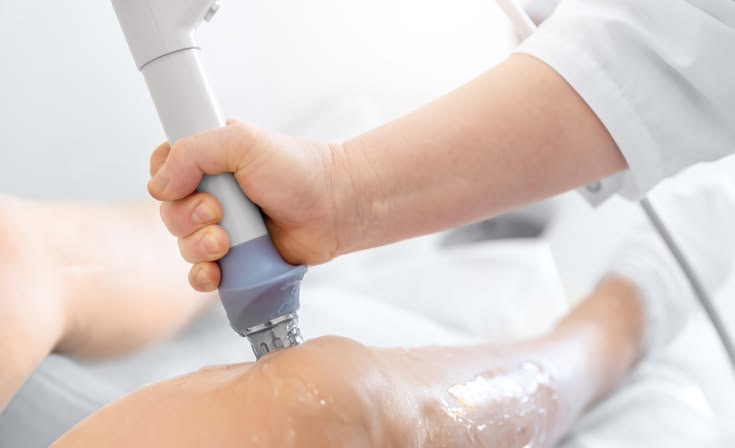
Have you ever wondered how shockwave therapy helps you heal faster? Shockwave therapy sessions have become an accepted treatment for many musculoskeletal injuries and should typically be considered when more traditional treatment options have failed to provide relief. Utilizing focused acoustic pulses into injured tissue can stimulate the biological healing process within your body. Not only can shockwave therapy help reduce pain, but can also expedite the rehabilitation process.
Mechanical Stress Promotes Cellular Growth
Shockwave therapy, also known as extracorporeal shockwave therapy (ESWT), uses acoustic pulses of energy focused on injured tissue. These acoustic pulses are rapid successions of pressure that place mechanical stress on tissue.
Mechanical stress increases cellular activity which promotes tissue healing. With injured tissue, you generally have decreased cellular function. When you implement passive treatment modalities, you typically aren’t increasing cell activity nor promoting repair. That’s where shockwave therapy can play an important role.
Mechanical Forces Are Converted Into Cellular Activity
So how do mechanical forces promote healing? When we look at ESWT on a cellular level, we are able to see how the mechanical pressure is actually converted into cellular activity.
Through a process called mechanotransduction, deformation of the cell membrane and internal cell structures provoke biochemical reactions. These reactions trigger signals to increase the production of growth factors and proteins involved in tissue healing. Over time, with repeated exposures to shockwave therapy, we can see improvements in collagen production and matrix formation.
Increased Local Blood Flow Promotes Tissue Healing
With ESWT, we see an increase in local blood flow to the affected area. Increasing blood flow helps carry more oxygen to damaged tissue and increases the removal of waste buildup.
As blood flow continues to increase with repetitive treatments, we can see an acceleration in tissue regeneration. For injuries that have been present for a while, this increase in blood flow helps improve chronic issues as blood flow was likely restricted to the affected area.
Decreased Pain Signals Promote Healing
In addition to improving blood flow, shockwave therapy can directly help decrease pain signals being sent to your brain. With the treatment itself, we see a reduction of pain causing neurotransmitters such as Substance P.
Not only does this promote less sensitivity in the area being treated but continued use can help nerve endings become less sensitive over time. If you are experiencing pain due to a repetitive motion injury, you will likely feel better after just a few treatments.
Shockwave Breaks Down Scar Tissue
If you have suffered an injury that has led to calcification or hardened scar tissue, shockwave can help.
The energy passing through your body helps break down these abnormal masses. This returns normal elasticity to the affected tissues and improves your motion.
Improved Motion Promotes Strength
Conditions like chronic tendinopathy, plantar fasciitis, and delayed bone healing are some of the most common injuries treated with shockwave.
These injuries respond well to shockwave therapy because we can help promote healing down to a cellular level. For tendon injuries, we see improved collagen production and remodeling. Bones that take a long time to heal can also see improvement with ESWT as blood flow increases and promotes quicker healing.
Best Results When Combined With Rehabilitation
While shockwave therapy does wonders for injured tissue, it is important to couple treatments with a rehabilitation program.
Not only can rehabilitation help maintain strength and mobility, but it also allows you to target injured muscles to regain proper movement patterns.
Most clinicians will provide several treatment sessions over the course of a few weeks. How often you receive treatments will depend on your individual needs. Patients typically improve throughout the treatment process which can be monitored by subjective measures like pain and function or objective measures like imaging.
Safety Of Shockwave Therapy
While shockwave is relatively safe, you could potentially experience some bruising, redness, and soreness. These side effects should subside within a few days.
Like any treatment, there are certain conditions that would disqualify you from receiving shockwave therapy. These contraindications include things like pregnancy, infections, and bleeding disorders. Be sure to speak with your medical provider if you have any questions regarding your ability to receive treatments.
What To Expect
Each session will typically take anywhere from 15-30 minutes. Some people describe the treatment as uncomfortable, while others don’t feel anything. As with any pain you are experiencing, you should notify your provider if you feel discomfort during the treatment.
You may experience some soreness after treatment, but this should go away within a few days.
How Long Until I See Results
Some patients notice a decrease in pain after their first or second session. However, most of the healing process occurs later on as the body begins to enact cellular changes.
Conclusion
With increased blood flow, decreased pain signaling, and breakdown of scar tissue, it’s no wonder why shockwave promotes healing. When you add in targeted rehabilitation to shockwave treatment, you can see significant improvements in a short period of time.
Return to sport and activity stronger than before with the help of shockwave therapy.
Frequently Asked Questions
How many shockwave therapy sessions will I need?
Most treatment protocols will include 3-6 shockwave therapy sessions. Your sessions will be spaced out a few days to a week apart. The total amount of sessions you need will be determined by your condition and how you respond to treatment.
Is shockwave therapy painful?
Some people have reported experiencing pain during their session, while others have felt little to no pain. Everyone’s tolerance is different, which is why most machines can adjust the intensity of the treatment.
How long will it take to see results from shockwave therapy?
While some people feel better after their first treatment, others may not see improvements until their third or fourth session. The biological processes take time, so give your body the chance to heal itself.