
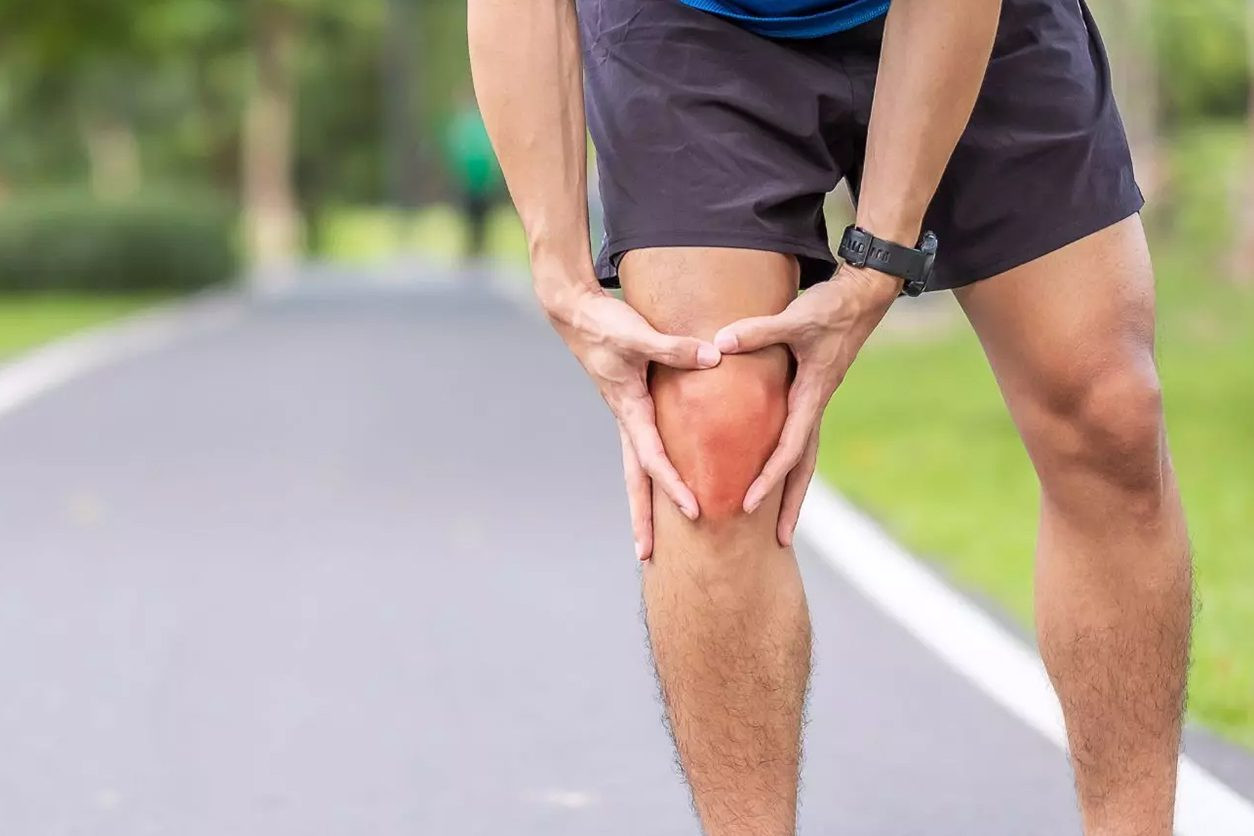
Runner’s knee — known clinically as patellofemoral pain (PFP) — is a dull ache around or behind the kneecap that flares with running, squatting, stairs, or sitting too long with a bent knee. The best-supported runner’s knee treatment is exercise therapy that strengthens the hips and knees together, not rest, and most runners improve over six weeks to a few months. The catch: the pain tends to return if you only back off and never fix the strength and mechanics that caused it.
If front-of-knee pain has crept into your summer mileage around College Station, here’s exactly what’s going on, how a realistic recovery timeline looks, and how we treat it at Alpha Sports Performance Medicine.
What Runner’s Knee Actually Is
Runner’s knee is pain arising from the joint between the kneecap (patella) and the thigh bone (femur), and it’s one of the most common running injuries there is. The signature is an aching, sometimes grinding pain around or behind the kneecap that worsens with loaded knee bending — running downhill, descending stairs, deep squats, or the classic “theater sign” that shows up after sitting a while with the knee bent.
Running loads the body hard, and the knee absorbs a lot of it. A 2021 study in the Journal of Orthopaedic & Sports Physical Therapy found a 1-year running-injury incidence of 45.9% among recreational runners (Desai et al.), and patellofemoral pain is a leading reason people end up in that statistic. It isn’t limited to elite athletes, either: a systematic review in PLOS ONE reported a point prevalence of 22.7% in female adolescent athletes and an annual prevalence near 28.9% in adolescents overall (Smith et al., 2018).
One myth worth clearing up early: runner’s knee is usually not a sign your knee is “wearing out” or that you’re headed for surgery. It’s a load-and-control problem, and it responds well to the right rehab — which is exactly why the treatment section below leads with strengthening rather than an MRI.
What Causes Runner’s Knee?
Most runner’s knee traces back to how the kneecap is loaded and controlled — and weak hips are a recurring culprit. Research consistently shows that people with PFP have measurably weaker hip muscles: a 2023 systematic review with meta-analysis found reduced hip external-rotation and hip-abduction strength versus healthy controls, on the order of a ~36% deficit in external rotators and ~26% in abductors in some studies (Healthcare, 2023).
Here’s why that matters mechanically. When the glutes and deep hip rotators are weak, the thigh drifts inward and rotates as you land, letting the knee cave toward the midline. That changes how the kneecap tracks in its groove and concentrates stress behind it. Layer on a sudden jump in training — recreational runners average roughly 7.7 injuries per 1,000 hours of running, with training error the common thread (Videbæk et al., Sports Medicine, 2015) — and an irritated kneecap joint is the predictable result. In a Texas summer, that “training error” is often trying to hold pace through the heat and unconsciously altering your stride.
An honest caveat: researchers can’t yet say for certain whether weak hips cause PFP or partly result from it. Either way, restoring hip and knee strength is what reliably resolves the pain.
Runner’s Knee vs. Other Common Knee Injuries
Front-of-knee pain isn’t always patellofemoral pain, and the fix differs by diagnosis. Use this as a guide to what to ask about — not a substitute for an exam.
| Condition | Where it hurts | Classic trigger | First-line fix |
|---|---|---|---|
| Runner’s knee (PFP) | Around/behind the kneecap | Stairs, squats, sitting with bent knee | Hip + knee strengthening |
| IT band syndrome | Sharp pain on the outside of the knee | Later miles, downhill running | Hip strength + load management |
| Patellar tendonitis | Just below the kneecap, on the tendon | Jumping, deep squats, hills | Progressive tendon loading, shockwave |
| Meniscus injury | Deep in the joint line; may lock/catch | A specific twist or trauma | Exam ± imaging; graded rehab |
The overlap is real — PFP and IT band syndrome share root causes like hip weakness and a training spike — but the location and treatment specifics differ, so pinning down which one you have is the first job of a good evaluation.
How to Treat Runner’s Knee
The best-supported first-line treatment for runner’s knee is exercise therapy — specifically, combined hip- and knee-strengthening, which outperforms knee exercises alone. The JOSPT Clinical Practice Guideline for patellofemoral pain (Willy et al., 2019) names exercise therapy as the core intervention, and a 2018 JOSPT meta-analysis (Nascimento et al.) found that adding hip strengthening to knee work produced greater pain relief and better function than targeting the knee alone.
A practical, evidence-aligned plan looks like this:
- Strengthen hips and knees together — glute-focused work (bridges, side-lying and standing hip abduction, single-leg step-downs) alongside quad and knee-control exercises. This is the non-negotiable foundation.
- Cut load temporarily, don’t stop entirely — reduce mileage and downhill running and swap in low-impact cross-training (bike, pool) so you keep fitness while the joint calms down.
- Fix the mechanics — a gait and strength assessment to find your specific weak link, because the fix isn’t identical for every runner.
- Manage the irritation — hands-on soft tissue work and short-term activity modification to settle symptoms enough to train the strength work productively.
At Alpha Sports, that means a targeted physical rehabilitation program built around hip and knee strengthening, paired with soft tissue therapy and dry needling to release the tight, overloaded tissue that alters how you move. For stubborn cases tied to tendon irritation, shockwave (StemWave®) therapy can be added to the plan. What we don’t do is hand you a knee sleeve and tell you to rest — because that’s the approach research links to relapse.
Runner’s Knee Recovery Timeline
Most runners with patellofemoral pain start feeling better within a few weeks of consistent rehab, but full recovery usually takes six weeks to a few months — and rushing it is how it becomes chronic. The JOSPT guideline builds its recommendations around a minimum of roughly six weeks of progressive exercise, and outcomes are best when that work continues even after the pain eases.
| Phase | Timeframe | Focus |
|---|---|---|
| Settle symptoms | Weeks 1–2 | Reduce load, control irritation, start hip/knee basics |
| Build strength | Weeks 2–6 | Progressive hip + knee strengthening, low-impact cross-training |
| Reload running | Weeks 6–12 | Gradual return to mileage, address gait, keep strengthening |
| Stay resilient | Ongoing | Maintain strength work to prevent recurrence |
The most important number in the research is a cautionary one: patellofemoral pain frequently persists when it isn’t treated well. Follow-up studies find roughly 40% of people report an unfavorable outcome at 12 months (StatPearls; JOSPT CPG), and it can linger for years in those who only rest. Translation — the runners who fully recover are the ones who do the strengthening, not the ones who wait it out and hope.
A note on soreness versus injury: normal post-run muscle soreness (DOMS) builds over the first day or so and typically resolves within about five days (Cleveland Clinic). Runner’s knee is different — it’s a specific, recurring joint pain that shows up at a predictable point in your run and doesn’t fade on its own.
How to Keep It From Coming Back
Prevention is the same lever as treatment: keep the hips and knees strong and respect your training load. A few habits carry most of the benefit — progress weekly mileage gradually (the widely taught ~10% guideline), keep two short strength sessions in your week year-round, rotate reasonably fresh shoes, and add downhill and speed work back slowly rather than all at once. In College Station’s summer heat, run in the cooler morning window so fatigue doesn’t quietly wreck your stride late in a session — tired, sloppy mechanics are where the kneecap gets overloaded.
When to See Someone in College Station
Book an evaluation if knee pain has lasted more than a week or two, keeps returning every time you ramp mileage, changes your stride, or isn’t improving with rest. Certain signs warrant prompt attention rather than wait-and-see: a knee that locks, gives way, or swells significantly, or pain following a specific traumatic injury — those can point to something beyond patellofemoral pain and should be examined.
Our sports chiropractic and rehab team treats Aggieland runners — from first-timers building toward a fall race to Texas A&M students and Bryan–College Station road-race regulars — with hands-on care, dry needling, shockwave, and progressive rehab under one roof. The goal is simple: find your specific weak link, fix it, and keep you running.
Frequently Asked Questions
How do you treat runner’s knee? The best-supported treatment is exercise therapy that strengthens the hips and knees together, combined with a temporary cut in running load and work to correct your mechanics. Research shows hip-plus-knee strengthening beats knee exercises alone. Rest by itself rarely fixes it, because it doesn’t address the underlying weakness.
How long does runner’s knee take to heal? Most runners feel improvement within a few weeks, but a full recovery typically takes six weeks to a few months of consistent rehab. Recovery is faster and more durable when you keep strengthening even after the pain eases — patellofemoral pain often returns in people who only rest.
Is it OK to keep running with runner’s knee? Usually you don’t have to stop entirely, but you should cut back. Reduce mileage and downhill running, swap in low-impact cross-training like cycling or swimming, and don’t run through sharp or worsening pain. Continuing full mileage on an irritated kneecap tends to prolong the problem.
Why do my knees hurt when I run but not otherwise? Running loads the kneecap joint repeatedly, and if weak hips let the thigh rotate inward on landing, the kneecap tracks poorly and gets irritated. At rest that load disappears, so the pain fades — which is exactly why strengthening the hips and knees, not just resting, is the fix.
Does runner’s knee require surgery? Almost never. Patellofemoral pain is a load-and-control problem that responds well to conservative care — exercise therapy, activity modification, and mechanics work. Surgery is rarely indicated and reserved for specific structural problems a proper exam would identify.
What’s the difference between runner’s knee and IT band syndrome? Runner’s knee (patellofemoral pain) is felt around or behind the kneecap, at the front of the knee. IT band syndrome produces sharp pain on the outside of the knee. They share root causes — often hip weakness and a training spike — but the location and treatment specifics differ, so an exam helps pin down which one you have.
Sidelined by knee pain and want to run without it? Book an appointment online or contact Alpha Sports in College Station — we’ll find the cause and build the strengthening plan that actually keeps it away.