
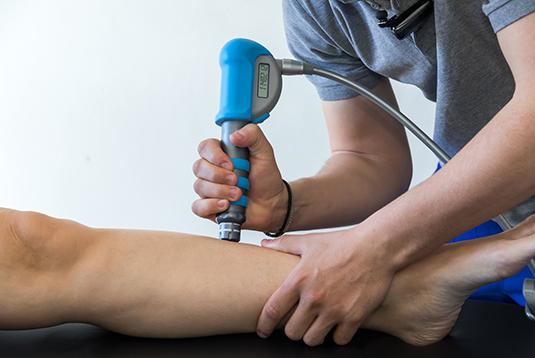
Active individuals often benefit from recovery treatments like shockwave therapy that accelerate healing, relieve pain, and promote tissue repair. Shockwave therapy can improve circulation and cellular response to healing by using focused acoustic waves on injured or sore muscles, tendons, ligaments, and fascia.
The therapy is popular with athletes because it focuses on resolving pain instead of masking the symptoms with medication. You can often continue modified exercise and activity while undergoing shockwave therapy as it supports the body’s natural healing response.
How Shockwave Therapy Works
The controlled acoustic pulses are emitted into the injured or sore area of the body. When shockwave therapy is applied to areas of muscles, tendons, and fascia it causes the sound waves to:
- Increase local blood flow
- Stimulate collagen production
- Decrease chronic inflammation
- Break up scar tissue and calcifications
- Promote tissue regeneration
- Decrease pain sensitivity
Increasing blood flow allows oxygen and nutrients to reach damaged areas to begin the healing process. Cellular activity increases in the treated area, which helps the body heal injured structures.
Typically treatment sessions are quick and can be done in the outpatient setting at a sports medicine or rehabilitation clinic.
Accelerating Recovery After Training
Hard workouts and training cycles can lead to inflammation within muscles and the connective tissue. This muscle soreness and stiffness can lead to slower recovery.
Shockwave therapy treats injuries by increasing blood flow to injured areas and helping to flush out metabolic waste buildup. This can help athletes recover faster and return to consistent training.
Shockwave Therapy for Athletes
- During heavy training cycles
- Pre-competition tournaments
- Return to play rehab
- Chronic overuse conditions
- Recovery from repetitive strain injuries
Preventing the buildup of chronic damage can start with utilizing shockwave therapy to help your body recover faster.
Treating Chronic Tendon and Soft Tissue Injuries
One of the most common uses for shockwave therapy is treating chronic tendon pain and overuse injuries. Conditions like achilles tendinopathy, plantar fasciitis, and patellar tendinopathy respond well to acoustic wave therapy.
These injuries can be caused by repetitive stress that accumulates over time. When the amount of stress put on the body exceeds its ability to recover, injuries can occur. Shockwave therapy may help promote healing in overused tissue that has become painful and chronically irritated.
The acoustic waves help to remodel collagen and increase tissue organization.
Reducing Pain Without Surgery
One of the benefits of shockwave therapy is that it doesn’t have any recovery time like surgery does. Athletes like shockwave therapy because there is no need for injections or complete rest.
Shockwave therapy can:
- Decrease sensitivity in nerve endings
- Modulate chemicals that promote inflammation
- Decrease chronic pain signals
- Improve mobility of the affected tissues
Many people notice pain relief after several shockwave therapy sessions and are able to fully participate in strengthening and mobility exercises.
Addressing the underlying issue can also prevent re-injury.
Restore Mobility and Performance
When you have pain or restricted motion, your body compensates and moves differently. This can place more stress on muscles and joints that aren’t injured.
Shockwave therapy can help restore mobility by reducing tissue stiffness. As your mobility returns, you’ll feel more confident in your body’s ability to move correctly when exercising.
Your overall performance can improve because you’ll have:
- Faster sprint times
- Improved jump and land technique
- Increased throwing mechanics
- More forceful muscular contractions
- Improved movement efficiency
Increasing mobility allows your body to move how it’s intended to which can reduce your risk of injury.
A Valuable Addition to Your Rehab Program
While shockwave therapy has many benefits on its own, it can be combined with other rehabilitation treatments. Sports medicine doctors and physical therapists will often recommend shockwave therapy alongside the following:
- Progressive strength training
- Mobility drills
- Massage or manual therapy
- Neuromuscular reeducation
- Load management
- Sport-specific exercises
Your body will continue to heal as you move correctly and build up your strength under controlled conditions.
This can help you return to sport more confidently while decreasing your chances of reinjury.
Safety and What to Expect
Shockwave therapy is safe when performed by a trained professional. Most people only experience slight discomfort during treatment and some temporary soreness afterwards.
- Injury being treated
- Type of tissue injured
- Length of time you’ve had symptoms
- How you respond to each treatment
Exactly how many shockwave therapy treatments you need will vary. Most patients receive 3-6 treatments spread out over several weeks.
Speak to your provider if you have any medical conditions, are pregnant, have an active infection, or have a bleeding disorder.
Conclusion
Athletes turn to shockwave therapy to heal faster because it increases blood flow to injured tissue, improves collagen regeneration, and promotes healing. Active individuals find relief from both acute sports injuries and nagging chronic conditions without having to take time off from training.
Shockwave therapy can be used along with other treatment methods to keep you playing your sport pain-free for years to come.
Frequently Asked Questions
Q: How long does it take to feel results from shockwave therapy?
A: Some athletes feel better after just a few treatments, but it can take several weeks to heal completely as the body continues to repair the injured tissue.
Q: Does shockwave therapy hurt?
A: Some people experience mild discomfort during treatment, but you will likely be able to return to your normal activities immediately following the therapy session.
Q: Can I use shockwave therapy instead of physical therapy?
A: No, you should not use shockwave therapy in place of traditional physical therapy. Sport-specific exercises and proper strength training should be used in combination with shockwave therapy to achieve the best result.