
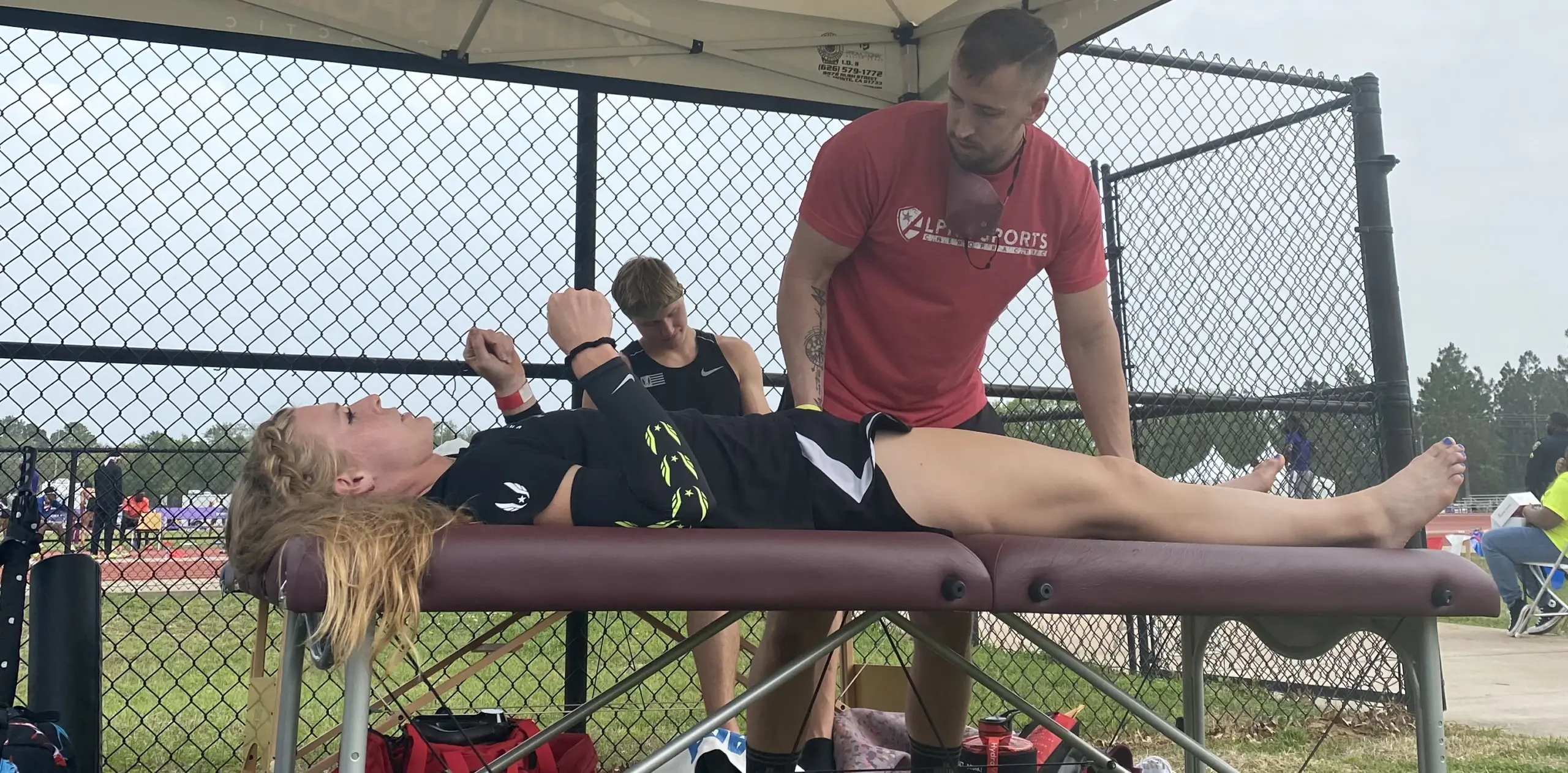
A pulled hamstring takes anywhere from 2 to 3 weeks for a mild Grade 1 strain to 2 to 3 months or more for a severe Grade 3 tear — the recovery time depends almost entirely on how many muscle fibers were torn. The pull you feel in the back of your thigh is a strain of one of the three hamstring muscles, and getting the grade right early is what separates a clean four-week comeback from a nagging injury that keeps re-tearing all season.
If you felt a sudden grab or pop in the back of your thigh sprinting to first base, chasing a soccer ball, or pushing the pace on a summer run in Bryan–College Station, here’s what your recovery timeline actually looks like — and how to avoid the re-injury trap that catches so many athletes.
Pulled Hamstring Recovery Time by Grade
Hamstring strains are graded 1 to 3 based on how much muscle tissue tore. Doctors and sports clinicians use this grading — the same system referenced by the Cleveland Clinic — because the grade drives both your recovery time and your rehab plan.
| Grade | What happened | Typical symptoms | Recovery time |
|---|---|---|---|
| Grade 1 (mild) | Overstretch with only a few torn fibers | Tightness or dull ache, minimal strength loss, you can usually walk | 2–3 weeks |
| Grade 2 (moderate) | A partial muscle tear | Sharp pain, swelling/bruising, noticeable weakness, limping | 4–8 weeks |
| Grade 3 (severe) | A complete tear or rupture | Sudden “pop,” significant bruising, hard to walk, sometimes a palpable gap | 3+ months (surgery possible) |
According to the Cleveland Clinic, mild hamstring injuries often settle in a week or two, while severe strains can take months — and a full Grade 3 rupture, especially where the tendon pulls off the bone near the sit-bone, may need surgical repair before rehab even begins.
How to Tell Which Grade You Have
The fastest at-home read on your grade is how the leg behaves in the first 48 hours. A Grade 1 strain lets you walk with only mild discomfort and maybe a little stiffness the next morning. A Grade 2 tear brings visible bruising within a day or two, real weakness when you try to bend your knee against resistance, and a limp. A Grade 3 injury usually announces itself with an audible pop, dramatic bruising down the back of the thigh, and difficulty bearing weight.
Bruising is a useful clue because it signals bleeding from torn fibers — the more (and the lower down the leg it tracks), the more significant the tear. That said, grade is best confirmed with a hands-on exam, and sometimes imaging. This is exactly the kind of injury where a quick evaluation at Alpha Sports Performance Medicine in College Station saves you from guessing wrong and losing weeks.
Why Hamstrings Re-Injure So Often
Here’s the stat that should shape your whole recovery: hamstring strains have one of the highest re-injury rates in all of sports. Research summarized across sports-medicine studies puts recurrence anywhere from roughly 12% to over 30%, with the biggest spike in athletes who return to full speed too soon. The first two weeks after you feel “basically fine” are the most dangerous — the scar tissue is still immature and far weaker than healthy muscle.
That’s why “wait until it stops hurting” is the wrong finish line. Pain often fades before the muscle regains its strength and its ability to handle high-speed lengthening loads (think the long stride of a sprint), which is when hamstrings actually fail. Clearing those specific benchmarks — not the calendar and not the absence of pain — is what makes a comeback stick.
The Recovery Protocol: From Pull to Full Speed
Modern hamstring rehab moves through overlapping phases rather than passive rest. Here’s the arc most athletes follow.
Days 1–5: Protect and calm it down
Follow the POLICE principle — Protection, Optimal Loading, Ice, Compression, Elevation. Brief relative rest, ice for 15–20 minutes a few times a day, and gentle pain-free movement early. Total bed rest is out; extended immobilization actually weakens the muscle and slows healing, per current sports-medicine guidance.
Week 1–3: Restore range and start loading
Once walking is comfortable, progressive strengthening begins — this is the engine of recovery. Eccentric exercises (loading the muscle as it lengthens, like the Nordic hamstring curl) are the best-supported way to cut re-injury risk, shown in peer-reviewed research to substantially reduce hamstring strains when trained consistently. In clinic, soft tissue therapy and dry needling help release the guarding and compensations that build up around a healing strain, so you move cleanly instead of limping into a new problem.
Weeks 3–8+: Rebuild strength, speed, and confidence
A structured physical rehabilitation program progresses you from strength work to running drills to sprint mechanics, restoring the muscle’s tolerance for high-speed load. NormaTec compression and recovery work can support you between sessions, but they support the rehab — they don’t replace the strengthening that actually protects the muscle.
Return-to-sport checklist (clear these, not the calendar)
- Full, pain-free range of motion versus your other leg
- Hamstring strength within ~90% of the uninjured side
- Sprinting and cutting at full effort with no pain, grabbing, or hesitation
- No morning-after soreness following a hard session
When to Get a Pulled Hamstring Checked in College Station
See a professional if you heard a pop, can’t walk without a limp after a couple of days, have significant bruising, or feel a gap in the muscle — those point to a Grade 2 or 3 that needs a real plan. It’s also worth booking if a “minor” tweak keeps returning every time you ramp up training, which is the classic sign of a strain that was rushed. Whether you’re an Aggie athlete, a Friday-night-football player, or a weekend runner, we’ll grade the injury accurately, treat the tissue, and build a return-to-play plan around benchmarks instead of guesswork.
Frequently Asked Questions
How long does a pulled hamstring take to heal? A mild Grade 1 strain typically heals in 2–3 weeks, a moderate Grade 2 partial tear in 4–8 weeks, and a severe Grade 3 tear in 3 months or longer — sometimes requiring surgery. Recovery depends on the grade and how disciplined your rehab is.
Should I stretch a pulled hamstring? Gentle, pain-free range-of-motion work is helpful early, but aggressive stretching of a fresh strain can pull on healing fibers and set you back. Progressive strengthening — especially eccentric loading — does far more for recovery than stretching alone.
Can I keep training with a pulled hamstring? You can usually keep fit with pain-free cross-training like cycling or pool work, but running through a real hamstring strain risks turning a Grade 1 into a Grade 2. If it grabs or sharpens when you push the pace, that’s your signal to back off and get it assessed.
Why does my hamstring keep re-tearing? Recurrence is common — up to roughly a third of hamstring injuries return — usually because the athlete came back before regaining full strength and high-speed tolerance. Pain fading is not the same as being healed. Meeting objective return-to-sport benchmarks is what prevents the re-tear.
Do I need an MRI for a hamstring strain? Most Grade 1 and 2 strains are diagnosed with a clinical exam and don’t need imaging. An MRI is usually reserved for suspected Grade 3 tears, injuries near the sit-bone, or cases that aren’t improving as expected, to guide whether surgery is needed.
How soon can I sprint again? Only after you’ve cleared the return-to-sport checklist — full pain-free range, near-symmetric strength, and full-effort running with no symptoms. For a Grade 1 that may be around 3 weeks; for a Grade 2 it’s often 6 weeks or more. Rushing the sprint is the single most common cause of re-injury.
Dealing with a hamstring that won’t fully heal — or keeps coming back? Book an appointment online or contact Alpha Sports in College Station and let’s get you back to full speed the right way.