
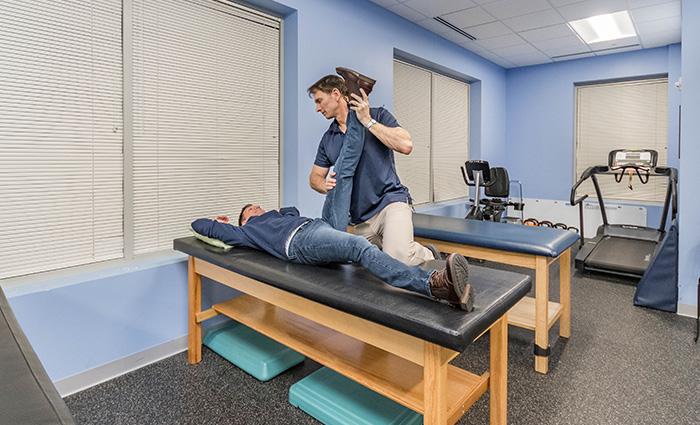
The purpose of physical rehabilitation after surgery is to restore function, mobility, strength and confidence to your body while recovering.
When you sustain an injury that requires surgery, the procedure fixes the structural damage or dysfunction that caused your symptoms. Once the tissues heal, you may experience weakness, stiffness, movement restrictions, and inefficient movement patterns that require additional work to correct.
Without proper recovery through physical rehabilitation, your muscles will continue to weaken, joints will tighten up, and your body will lack the confidence to move how it once did – slowing down your recovery time.
By participating in physical therapy after surgery, you can improve your mobility in a safe manner while decreasing pain levels, preventing future complications, and promoting a better long-term outcome.
Every phase of recovery is beneficial and allows your body to move and function as it needs to heal.
Benefits of Physical Rehab Include:
- Rebuilding strength and activating weak muscles
- Restoring joint mobility
- Improving movement quality
- Decreasing pain and stiffness
- Reducing swelling
- Preventing long-term complications
- Regaining independence
Rebuilding Strength & Muscle Activation
Surgeries often lead to muscles being inhibited from pain, swelling, disuse, or a combination of these factors. Orthopedic surgeries such as knee surgery, shoulder surgery, hip surgery and spine surgery can make even the simplest movements feel extremely difficult.
Due to a lack of movement and normal activity, muscles tend to become weaker and lack coordination.
Physical therapy helps reactivate muscles by performing certain exercises and exercises that focus on neuromuscular training. Slow, controlled movements help the brain communicate with the muscle back to a state of normal.
Strengthening these muscles back to normal allows:
- Improved muscle endurance
- Restoration of support around joints
- Better balance and coordination
- Decreased chances of compensatory movement strategies
Physical therapists take things slow and help rebuild strength and function rather than pushing you through movement too soon.
Restoring Joint Mobility
Just like muscles, joints need movement to stay healthy. Without joint mobility exercises after surgery, you may find yourself becoming stiff and losing your range of motion quickly.
Physical therapy can improve your:
- Joint flexibility
- Coordination of movement
- Alignment
- Overall mobility
By performing certain exercises, you will be able to move your joints through their normal range while properly moving together. This includes daily activities like walking, going up and downstairs, reaching overhead, or standing from a seated position.
The focus here is not just regaining your movement, but regaining your quality of movement.
Improving your movement quality can help decrease stress on your healing tissues while improving function in the long term.
Decreasing Pain & Discomfort
After surgery, your body may experience pain for many different reasons. When you’re not moving properly due to pain, swelling, joint stiffness, muscle spasms/guarding, and lack of mobility can all contribute to increased discomfort.
Movement is one of the best ways to decrease pain after surgery. Physical therapy can help promote better circulation, decrease swelling, and retrain your nervous system on how to read movement.
As you increase your movement potential, your body will become better at recognizing different sensations. This allows your brain to trust movement again while decreasing the fear response many experience with pain during recovery.
Various pain management techniques including mobility exercises, manual therapy, stretching, neuromuscular re-education, and soft tissue work can help your body relax to decrease overall tension.
Improving Circulation & Eliminating Swelling
Swelling can cause major setbacks in the healing process while also limiting your ability to move. Engaging in light physical activity after surgery helps trigger your body to start moving blood and lymphatic fluid (which transports waste products) through your body.
Muscle contractions act as a pump to help get more blood flowing to the affected area. This helps:
- Bring more oxygen and nutrients to repair cells
- Limit stiffness/tightness
- Reduce your risk of blood clots
- Promotes better tissue healing
Movement is one of the best ways to help eliminate swelling after surgery.
Preventing Long-Term Complications
It is crucial to prevent long-term complications after surgery by participating in physical therapy.
Some of these complications include:
- Increased stiffness
- Weak muscles
- Buildup of scar tissue
- Joint instability
- Poor movement mechanics
- Higher risk of re-injury
Physical therapy allows your body to strengthen and prepare for more intense activity. Scar tissue heals much better when challenged through exercise and movement.
This can help you:
- Prevent restrictions
- Build stronger tissues
- Improve functional mobility
- Improve long term joint health
Without exercise, your body will hold onto many of these complications which can affect how you function down the road.
Regaining Your Independence
Another wonderful benefit of participating in physical therapy is the ability to return to your normal daily activities.
Physical therapy can help you walk without pain, climb stairs easier, lift things without difficulty, maintain a good balance, and perform your job or sport-specific activities.
Recovery can be difficult, but it is much more manageable when you have the ability to move how you did before injury. As you progress in strength and mobility, you will feel more confident in your body’s ability to move properly.
The Mental Benefits of Rehabilitation
Your mental health can be just as affected as your physical health when recovering from surgery. Not being able to move how you are used to moving can cause frustration, anxiety, and lack of confidence.
Rehabilitation allows you to check off accomplishments during your recovery. Tracking your progress and having obtainable goals can help you feel like you have a sense of control during this process.
Every little movement improvement you make is building your confidence back up while healing. Movement is only one piece of the puzzle to rebuilding both your body and mindset.
Many athletes notice:
- Better mood
- Less fear of movement
- Increased confidence
- Emotional recovery
- More motivation to heal
Keep in mind these are only a few benefits of physical rehabilitation. Your body needs movement to heal properly.
Recovery Takes Consistency
When you first begin rehabilitation after surgery, your therapist will go through different phases that you’ll need to adhere to.
These phases will progress in pain & swelling management, regaining your mobility, muscle activation, strength building, functional movement training, and return to activity.
It is important that you’re consistent with your therapy. Slow progress is key when healing to prevent any setbacks in your recovery.
Conclusion
Physical rehabilitation after surgery allows your body to regain the strength, mobility, and confidence it once had. Therapy can help improve many factors such as pain, circulation, future complications, and allows you move better in the long term.
Remember, your body heals better when you continue to move. Movement along with progressive exercise and having a therapist that specializes in your specific surgery are the keys to a successful recovery.
Rehabilitation can also help you feel more confident returning to your normal daily life, work, and sport.
Frequently Asked Questions
Q: How long should I be rehabbing after surgery?
A: Every surgery is different and it depends on your personal health and recovery goals. Some surgeries may only require 3-4 weeks of rehabilitation, while others may take upwards of 6 months. Orthopedic surgeries typically have longer recovery times due to the complexity of the procedures.
Q: Will physical therapy hurt after surgery?
A: Some soreness is to be expected when regaining your strength and mobility. However, you should never experience severe pain during therapy. Physical therapists will always go at your pace while taking into consideration what stage of healing you’re in.
Q: Is it bad if I skip physical therapy?
A: Yes, it can increase your chances of developing stiffness, weakness, loss of mobility, poor movement patterns, and other long-term problems that can affect your recovery.