
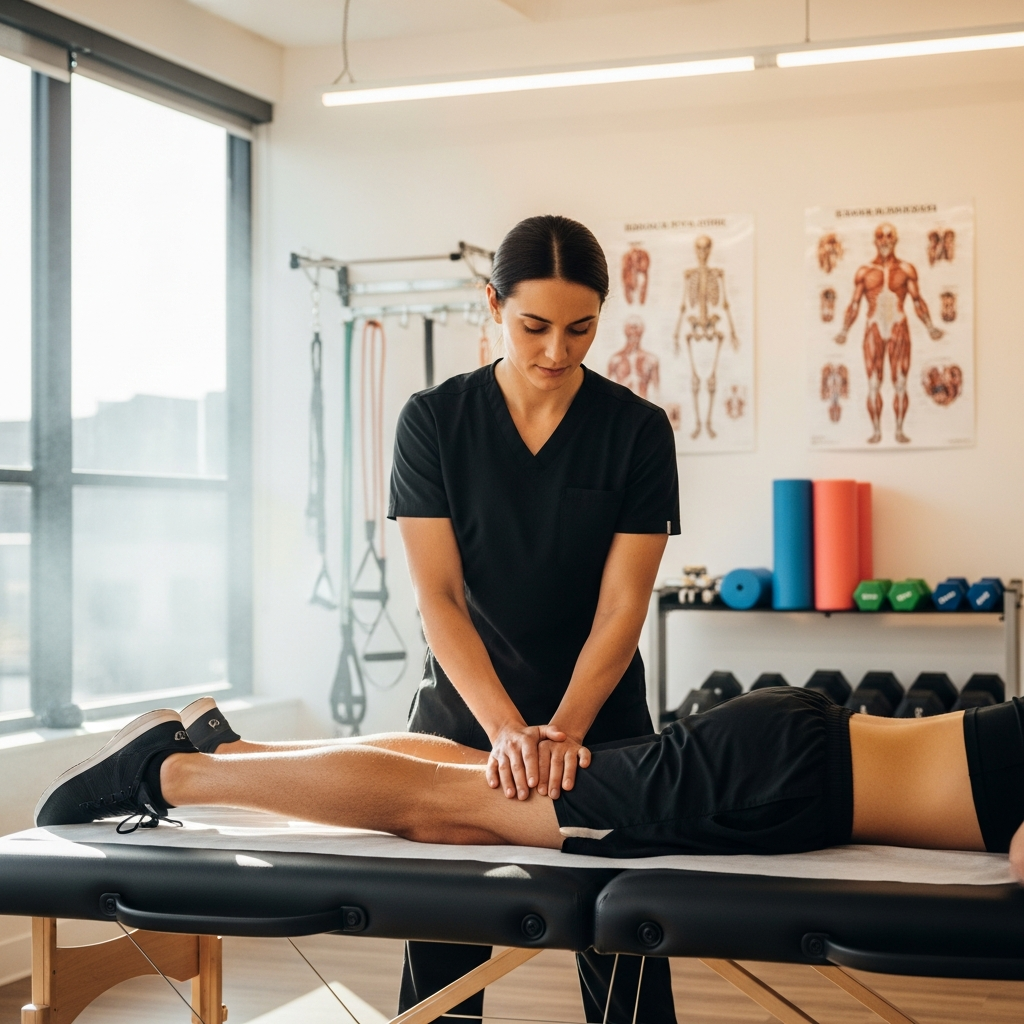
Sport-specific training programs focus on strength and conditioning exercises when addressing injury prevention. Yet soft tissue status is just as important for supporting tissue integrity and preventing painful muscle strains and overuse injuries.
Athletes enjoy many benefits from sports massage therapy including less muscle tension, improved tissue extensibility, and reduced damage from repetitive movements that cause movement imbalances. We frequently include sports massage in both rehab programs and performance enhancement programs at Alpha Sports Performance Medicine to keep our athletes moving freely and recovering faster between workouts.
Learn how incorporating massage strategically throughout your training cycle can help you avoid injuries while boosting performance.
Protecting Tissue Integrity & Preventing Strain
The muscles and connective tissues around your joints adapt to the loads they are exposed to on a regular basis. Tight muscles that are tired due to overuse are more likely to experience strain or irritation.
Massage therapy helps to break up these patterns of tension that develop with repetitive athletic motions like running, jumping, throwing, etc. By releasing muscle tone evenly over the body, less strain is placed disproportionately on certain muscles and joints.
Athletes who regularly receive soft tissue work often have better tolerance for training stimulus and take fewer minor injuries as a result.
Improving Soft Tissue Extensibility
Mobility is affected by the extensibility of your muscles and connective tissues. When soft tissues like your fascia and muscle fibers tighten up, they don’t allow you to move as freely and cause excess strain.
Certain massage techniques help improve mobility by increasing extensibility within the muscle and surrounding fascia. Improved tissue quality allows your joints to move through a fuller range of motion with less restriction.
Stretching also becomes more effective when combined with regular massage so you maintain increased mobility.
Addressing Chronic Micro Trauma
High intensity workouts leave behind microscopic muscle damage as part of the adaptation process. Without adequate rest these micro tears can add up and cause chronic muscle soreness.
Massage helps to remove adhesions that form within these overworked muscles. Stimulating cross fiber friction promotes collagen remodeling while increasing circulation in the targeted area.
Improved blood flow speeds recovery by bringing more oxygenated blood to the damaged tissues. Massages that encourage recovery help athletes experience less chronic pain and build greater resilience to training.
Psychological Benefits of Sports Massage for Athletes
Physical stress from training cannot be separated from its effects on the mind. One of the reasons athletes feel so much better after a deep tissue massage is because it activates the parasympathetic nervous system.
Allowing the body to rest and digest after a hard workout helps reduce cortisol levels while promoting a state of relaxation. Improved sleep quality and decreased pre competition jitters are common after regular massage.
Many athletes also feel more ‘mental clarity’ and focus when they fit massage into their regular recovery schedule.
Sports massage can be used as a way to prepare for competition as well. For many athletes, pre event massages are part of their routine to mentally and physically prepare for performance.
Improving Range of Motion
Limited range of motion at a joint is often caused by tight muscles or soft tissues. Massage therapy alleviates these problems by breaking up restrictions that limit joint mobility.
Increased range of motion allows your body to produce more power because you can move freely through an entire movement pattern. Not only does this improve performance, but it also minimizes your chance of injury by reducing your body’s need to compensate.
Regular maintenance massages help athletes hold on to these improvements in mobility.
Enhancing Neuromuscular Efficiency
Massage provides input to the nervous system that can help regulate muscle tension levels. Reducing overpersistent muscle guarding and improving the body’s proprioception can allow muscles to work together more efficiently.
This results in smoother movement patterns with less wasted effort. Athletic performance improves when athletes are not wasting energy correcting their position or posture during exercise.
Improving Joint Stability
Strength training improves muscle strength and endurance. When coupled with sports massage therapy, athletes can improve muscular balance and joint stability.
Many of the techniques used in trigger point therapy and myofascial release work help support joint alignment by evenly distributing tension across muscle groups.
If you want to know more about how sports massage therapy can help enhance your athletic performance or speed up recovery please give us a call at Alpha Sports Performance Medicine to speak with a certified trainer.
Strategic Timing of Massage Within Training Cycles
Sports massage can easily be paired with your training regimen when timed correctly. Deep tissue massages are generally reserved for post workout or after competitions to encourage circulation and reduce muscle soreness.
Lighter massages can be provided prior to training or competition to boost circulation without making your muscles too tired.
Frequency will vary depending on the athlete and their training phase. Endurance athletes may receive longer massages that focus on larger strokes, while power athletes benefit from more trigger point work.
It’s important to monitor a athletes soreness levels, sleep quality, and overall performance in the gym to discover what frequency works best for their body.
Sports massage is just one piece of the recovery puzzle. Though it’s not a replacement for strength training and conditioning, sports massage therapy complements these workouts by helping athletes maintain healthy tissue quality.
At Alpha Sports Performance Medicine we work closely with our coaches and other clinicians to develop a therapeutic massage program that enhances our athletes ability to train without getting injured.
Frequently Asked Questions
**How does sports massage help prevent injuries near me?******Sports massage reduces muscle tension, improves circulation, and corrects soft tissue restrictions that can contribute to strains and overuse injuries.
**Can sports massage improve flexibility and mobility?******Yes. Massage improves soft tissue extensibility, which helps joints move more freely and supports better movement mechanics.
**How often should athletes receive sports massage?******Frequency depends on training intensity, but many athletes benefit from sessions every one to two weeks during heavy training periods.
**Does sports massage help with muscle soreness after workouts?******Yes. Massage improves circulation and helps clear metabolic waste, which can reduce delayed onset muscle soreness and speed recovery.
**Can sports massage improve athletic performance?******By improving mobility, reducing tension, and enhancing neuromuscular coordination, sports massage can support better movement efficiency and performance consistency.
Sports massage therapy supports both recovery and performance. When integrated into a comprehensive training plan, it helps athletes maintain tissue health, recover faster, and stay ready for the demands of competition.