Faster Recovery Strategies to Restore Strength, Mobility, and Performance
Athletes aren’t content to just get better. They want to come back stronger and faster than before. The right physical therapy program takes a comprehensive approach to restore full health and function rapidly. Progressive loading, mobility restoration, neuromuscular retraining and sport specific conditioning stimulate recovery without setbacks. Alpha Sports Performance Medicine takes a performance centered approach to rehab. We utilize objective testing and staged progression protocols to minimize reinjury risk and decrease down time.
Rehab doesn’t have to be slow and boring. Strategic recovery is deeply individualized and data informed.
Identify Weak Links Through Comprehensive Testing
The foundation for any effective rehabilitation program is a thorough assessment of strength, mobility, stability, and functional movement. We begin every athletic rehab program with objective metrics to quantify strength deficits and range of motion restrictions. Normative data from our advanced strength testing allows us to target weak links with specific conditioning drills. Force plate and motion analysis help quantify biomechanical asymmetries that may stress healthy limbs or detract from performance.
Running athletes benefit from gait analysis to identify compensations in stride length, foot strike, and leg drive. Corrective exercises are prescribed based on findings, and load progression is carefully monitored to improve running economy without provoking setbacks.
Movement imbalances do not exist in isolation. Clues from posture, joint mobility, and weight distribution during exercise tests help us track down the root cause of pain or injury.
Restore Mobility and Tissue Quality With Manual Therapy
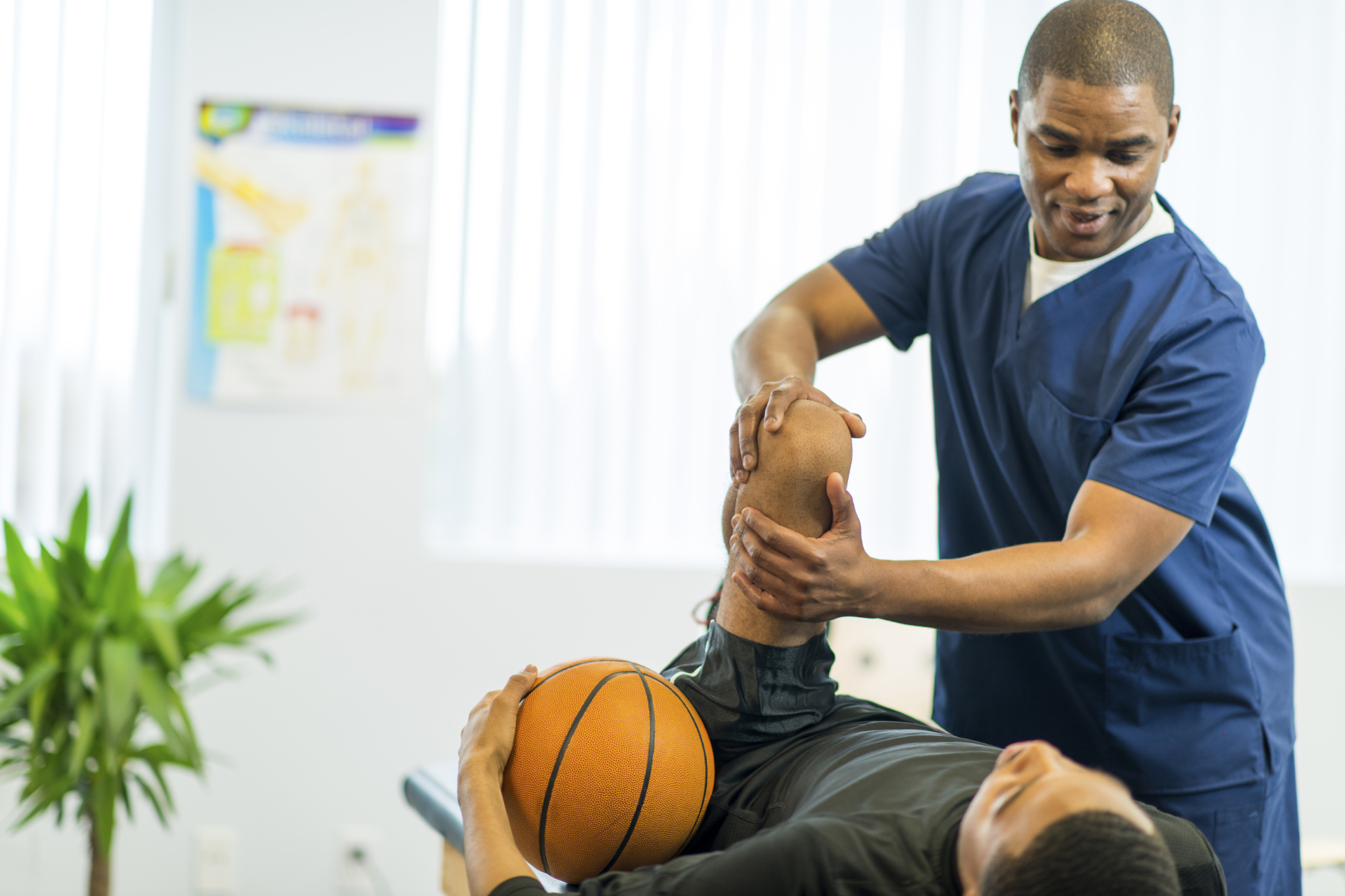
Manual therapy techniques like joint mobilization, myofascial release, and instrument assisted soft tissue work can help restore range of motion and tissue quality. By increasing joint play and local circulation, athletes often experience immediate improvements in movement quality following soft tissue therapy.
This allows earlier progression to strength and sport specific exercises. Instead of serving as the primary treatment, manual therapy is used strategically to enhance our athletes’ responsiveness to training stimuli.
Retrain Coordination for Peak Performance
Coordination is often overlooked during rehabilitation. Just because you can rebuild strength doesn’t mean the nerves and muscles can efficiently work together under load. Reactive drill progressions and balance exercises help improve neuromuscular communication.
The later stages of rehabilitation begin to incorporate more sports specific movement patterns under unstable and unpredictable conditions.
Simulate Sports Demands With Functional Conditioning
Tissues adapt to the loads you place on them. If you want to recover quickly without reinjury, you need to progress strength and conditioning carefully. Our rehabilitaion programs are broken into waves. Initial phases focus on rebuilding control of strength under slow, deliberate movements. Middle phases begin to integrate more power and combined movement patterns.
The final phase transitions athletes back to sport with conditioning drills that mimic game specific pace and fatigue.
Eccentric loading is especially crucial for helping tendons recover and adapt. Slow lengthening contractions condition collagen fibers and prepare the body to handle high force impulses.
Recovery Strategies To Supplement Rehab
Optimal recovery facilitates rehabilitation. Active recovery workouts promote blood flow and tissue healing without overly taxing the body. Light aerobic work, mobility drills, and movement prep are perfect examples of activities that can enhance recovery on rest days or after intense training sessions.
Keeping your body well hydrated and electrolytes balanced ensures muscle and nerve cells can fire optimally. We help our athletes develop individualized hydration strategies based on their unique sweat rates and environmental exposures.
Sleep and nutrition also have profound effects on the recovery process. Athletes who prioritize sleep consistency and nutritious foods night recover faster from workouts. Protein and carbohydrate timing is particularly important around workouts. Making sure your body has the building blocks for repair and recovery before and after workouts allows for optimal muscle protein synthesis.
No stone is left unturned when it comes to helping athletes recover quickly and safely.
Performance First Rehabilitation
Ready to learn more about how Alpha Sports Performance Medicine can help you recover from injury faster? Visit our athletic rehab program page to download our Comprehensive Rehab Guidebook and find a location near you.
Frequently Asked Questions
How can physical therapy help me recover from injury faster?
Physical therapy can help athletes restore range of motion, rebuild strength and coordination lost due to injury. Correcting movement imbalances and underlying weaknesses takes rehab to the next level and allows athletes to restrengthen without fear of setbacks.
What can I do to recover from a sports injury faster?
There are many things athletes can do outside of their training sessions to ensure they are recovering optimally. Active recovery, mobility work, sleep, nutrition and hydration all have a huge role in helping your body recover from workouts and come back stronger than before.
How long should I expect to be in physical therapy for an injury?
Every injury is different. Mild muscle strains and sprains can improve within a matter of weeks. More serious injuries like ligament reconstruction or chronic tendinopathy can take several months of consistent rehab before you are back to 100%.
Can physical therapy prevent me from reinjuring myself?
Correcting faulty movement patterns, regaining strength symmetry, and gradually reintroducing sport specific load goes a long way in preventing reinjury. At Alpha Sports, we want to make sure your rehab program is built to return you to sport stronger and more resistant to future injury.
Does sleep and nutrition really play a role in my recovery?
Definitely. Sleep and recovery nutrition are two of the most important pieces of the puzzle. Recovery nights lead to better muscle protein synthesis, hormonal regulation, and mental restoration. Focus on getting your calories from whole nutritious food sources and consume protein and carbohydrates before and after workouts to maximize your body’s ability to recover.